We Use CookiesWe use cookies to enhance the security, performance, functionality and for analytical and promotional activities. By continuing to browse this site you are agreeing to our privacy policy

10 Best Waterproof Concrete Crack Fillers 2026 in the United States
How do we rank products for you?

Our technology thoroughly searches through the online shopping world, reviewing hundreds of sites. We then process and analyze this information, updating in real-time to bring you the latest top-rated products. This way, you always get the best and most current options available.

headphones-stars

Our Top Picks

#1

Winner

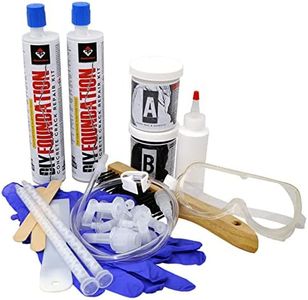
RadonSeal Complete DIY Foundation Crack Repair Kit, 10 Ft - Low-Viscosity Urethane Injection Sealant for Crawl Spaces & Concrete Basement Walls, Stops Water Leaks & Radon Gas, Drill-Free Filler

Rating
10.0
Chosen by1,179
Water Resistance
Adhesion Strength
Application Method

Most important from
1133 reviews

Water Resistance
This kit effectively stops water seepage even through hairline cracks, leaving basement walls completely dry after heavy rains.
Adhesion Strength
Thorough surface preparation is crucial—removing old materials and cleaning the crack area ensures the best adhesion and results.
Application Method
The injection process requires patience and careful flushing of each port with water to activate the foam’s expansion and fill the crack fully.
Durability
The polyurethane foam is extremely dense and expands forcefully, sometimes pushing out nozzle caps—a sign of thorough crack filling.

The RadonSeal Complete DIY Foundation Crack Repair Kit is designed to fix cracks in concrete basement walls and crawl spaces without the need for drilling, making it user-friendly and less invasive. It uses a low-viscosity, 2-part urethane foam that expands to fill cracks up to 0.5 inches wide, providing a strong seal with a tensile strength of 180 PSI, which indicates good adhesion to concrete surfaces and helps prevent water leaks and radon gas intrusion.

Its waterproof nature ensures reliable protection against moisture, while the foam form allows it to expand and adapt somewhat to minor movement, offering decent flexibility. The application is straightforward: you just need a standard caulking gun, so it’s accessible for most homeowners without special tools. It also works from inside the basement, avoiding costly exterior excavation.

This kit is primarily suited for smaller cracks (up to half an inch) and may not be ideal for larger or heavily shifting foundation issues. The product is a practical and effective option for DIYers aiming to stop minor water leaks and radon gas infiltration in concrete basement walls with minimal effort and tools.

Rating
10.0
Chosen by1,179
Water Resistance
Adhesion Strength
Application Method

Most important from
1133 reviews

Water Resistance
This kit effectively stops water seepage even through hairline cracks, leaving basement walls completely dry after heavy rains.
Adhesion Strength
Thorough surface preparation is crucial—removing old materials and cleaning the crack area ensures the best adhesion and results.
Application Method
The injection process requires patience and careful flushing of each port with water to activate the foam’s expansion and fill the crack fully.
Durability
The polyurethane foam is extremely dense and expands forcefully, sometimes pushing out nozzle caps—a sign of thorough crack filling.
#2

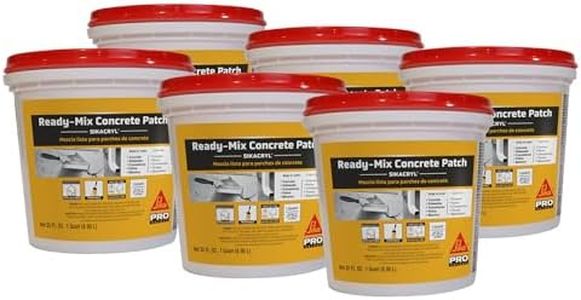
SIKA Sikacryl Ready-Mix Concrete Patch, Gray, Textured, 1 qt (6 Pack) - Durable Repair for Spalls and Cracks in Concrete and Masonry, Easy Cleanup, Acrylic-Based

Rating
9.1
Curing Time
Application Method

Most important from
4750 reviews

Curing Time
This compound dried in 24 hours and is one of the best easily applied products for repairing concrete cracks.
Application Method
Easy to use for DIYers.

The SIKA Sikacryl Ready-Mix Concrete Patch is a strong contender for those needing to repair concrete cracks and spalls. Its easy-to-use, premixed formula makes application straightforward, requiring just a putty knife or trowel. Once applied, it offers good adhesion and high strength, helping to ensure the repaired area remains durable and intact. Its acrylic-based composition not only prevents shrinkage and cracking but also makes for easy cleanup with water, eliminating the need for harsh chemicals. Furthermore, it adheres to VOC regulations, contributing to a healthier environment.

The product's curing time is relatively short, taking a few hours to set and about a day to fully cure, allowing for quick repairs. However, it's important to note that while it is designed to be waterproof, its primary material is acrylic latex, which may not be as robust as some other substances for long-term water exposure. Additionally, the product's weight (21 pounds for a pack of 6) might be cumbersome for some users.

Despite these minor drawbacks, the SIKA Sikacryl Ready-Mix Concrete Patch remains a reliable and user-friendly option for both amateur and professional use, scoring high in ease of use, durability, and environmental friendliness.

Rating
9.1
Curing Time
Application Method

Most important from
4750 reviews

Curing Time
This compound dried in 24 hours and is one of the best easily applied products for repairing concrete cracks.
Application Method
Easy to use for DIYers.
#3

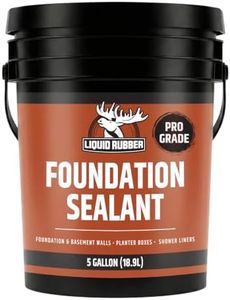
Liquid Rubber Basement and Foundation Repair Sealant - Waterproof Concrete Sealer & Crack Filler - Flexible Coating for Indoor & Outdoor Use - Waterproofing Paint - Black, 5 Gallon

Rating
9.1
Flexibility
Durability
Application Method

Most important from
3278 reviews

Flexibility
Provides a flexible, waterproof barrier that effectively stops leaks even in challenging, aged concrete foundations.
Durability
Applying multiple coats creates a durable seal that holds up well against heavy rains and moisture intrusion.
Application Method
The product goes on smoothly with a brush or roller, dries relatively quickly, and has a low odor, making it comfortable for indoor use.
Curing Time
Curing can be identified by a noticeable color change and a dry-to-the-touch finish, helping users gauge readiness for next steps.
Water Resistance
Helps control humidity and prevent water seepage effectively in crawl spaces and below-grade areas.
Adhesion Strength
The sealant's strong adhesion and waterproofing performance make it a reliable choice for DIY basement and foundation waterproofing projects.

The Liquid Rubber Basement and Foundation Repair Sealant is a flexible, waterproof coating designed to seal cracks and protect concrete surfaces from leaks and moisture. Its flexibility, offering up to 900% elongation, helps prevent future cracking by allowing it to stretch and move with the surface. This feature is particularly beneficial for areas that experience temperature fluctuations or slight foundation shifts.

This sealant adheres strongly to various materials such as concrete, wood, and metal, making it suitable for diverse repair needs. The water-based formula creates a permanent waterproof membrane that resists water penetration indoors and outdoors. It cures without mixing and contains zero VOCs, making it safe and convenient for indoor use.

Multiple coats are recommended—2 to 3 for indoor applications and 3 to 4 for outdoor—to ensure full waterproofing, requiring some patience during application. It can be applied with a brush, roller, or sprayer but is not suitable for walkable surfaces as it remains tacky after curing. When used with additional Liquid Rubber accessories for joints and cracks, the durability improves, indicating that the product performs best as part of a system. This sealant is well suited for homeowners and DIYers looking to waterproof basements, foundations, and concrete structures with a flexible, durable barrier against water damage.

Rating
9.1
Flexibility
Durability
Application Method

Most important from
3278 reviews

Flexibility
Provides a flexible, waterproof barrier that effectively stops leaks even in challenging, aged concrete foundations.
Durability
Applying multiple coats creates a durable seal that holds up well against heavy rains and moisture intrusion.
Application Method
The product goes on smoothly with a brush or roller, dries relatively quickly, and has a low odor, making it comfortable for indoor use.
Curing Time
Curing can be identified by a noticeable color change and a dry-to-the-touch finish, helping users gauge readiness for next steps.
Water Resistance
Helps control humidity and prevent water seepage effectively in crawl spaces and below-grade areas.
Adhesion Strength
The sealant's strong adhesion and waterproofing performance make it a reliable choice for DIY basement and foundation waterproofing projects.

Buying Guide for the Best Waterproof Concrete Crack Fillers

When it comes to choosing the right waterproof concrete crack filler, it's important to understand the key specifications that will ensure the product meets your needs. Waterproof concrete crack fillers are used to repair cracks in concrete surfaces, preventing water from seeping through and causing further damage. The right product will depend on the specific requirements of your project, such as the size of the crack, the type of concrete, and the environmental conditions. Here are the key specifications to consider when selecting a waterproof concrete crack filler.
Adhesion StrengthAdhesion strength refers to the ability of the filler to bond with the concrete surface. This is important because a strong bond ensures that the filler stays in place and effectively seals the crack. Adhesion strength is usually measured in pounds per square inch (psi). For small, non-structural cracks, a lower adhesion strength may be sufficient. However, for larger or structural cracks, a higher adhesion strength is necessary to ensure durability and effectiveness. Consider the size and nature of the crack when choosing the appropriate adhesion strength.
FlexibilityFlexibility is the ability of the filler to expand and contract with the concrete as it undergoes temperature changes and other environmental stresses. This is crucial for preventing the filler from cracking or breaking away from the concrete over time. Flexible fillers are typically made from materials like polyurethane or silicone. If the concrete surface is exposed to significant temperature fluctuations or movement, a more flexible filler is recommended. For stable, indoor environments, flexibility may be less of a concern.
Curing TimeCuring time is the amount of time it takes for the filler to fully harden and become effective. This can range from a few hours to several days, depending on the product. Faster curing times are beneficial for projects that require quick turnaround, such as emergency repairs or areas with high traffic. However, longer curing times may result in a stronger and more durable bond. Consider the urgency of your repair and the time you can allow for the filler to cure when making your selection.
Water ResistanceWater resistance is the ability of the filler to prevent water from penetrating the repaired crack. This is essential for protecting the concrete from water damage, which can lead to further cracking and deterioration. Water resistance is often indicated by the product's ability to withstand water pressure or its performance in wet conditions. For outdoor or submerged applications, a high level of water resistance is crucial. For indoor or less exposed areas, moderate water resistance may be sufficient.
Application MethodThe application method refers to how the filler is applied to the crack. Common methods include caulking guns, trowels, or pourable formulas. The ease of application can affect the overall effectiveness and appearance of the repair. For small, narrow cracks, a caulking gun or squeeze tube may be the best option. For larger or irregularly shaped cracks, a trowel-applied or pourable filler may be more suitable. Consider your comfort level with different application methods and the specific requirements of your project when choosing a product.
DurabilityDurability refers to the filler’s ability to withstand environmental conditions and wear over time. This includes resistance to UV rays, chemicals, and physical abrasion. Durable fillers are essential for areas exposed to harsh conditions or heavy use, such as driveways, sidewalks, and industrial floors. For less demanding applications, such as indoor repairs, durability may be less critical. Assess the environmental conditions and expected wear and tear on the repaired area to determine the necessary level of durability.

FAQ