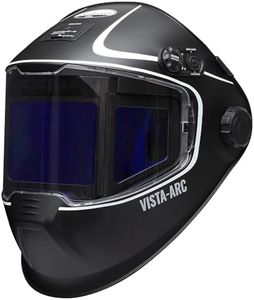
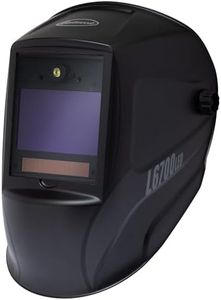
Buying Guide for the Best Weldcote Welding Helmets
Choosing the right welding helmet is crucial for both safety and comfort while working. A good welding helmet protects your eyes and face from harmful UV and IR radiation, sparks, and debris. When selecting a welding helmet, consider the following key specifications to ensure you get the best fit for your needs.Lens ShadeThe lens shade determines how dark the lens gets to protect your eyes from the bright welding arc. This is important because it prevents eye strain and damage. Lens shades are usually rated from 8 to 13, with higher numbers indicating darker shades. For light-duty welding, a shade of 8-10 might be sufficient, while heavy-duty welding may require a shade of 11-13. Choose a shade that provides clear visibility while ensuring your eyes are protected.
Auto-Darkening Filter (ADF)An auto-darkening filter automatically adjusts the lens shade based on the brightness of the welding arc. This feature is important because it allows you to keep the helmet down while positioning your work, improving efficiency and safety. ADF helmets are rated by their reaction time, typically in milliseconds. Faster reaction times (e.g., 1/25,000 of a second) offer better protection and comfort. If you do a lot of welding, an ADF helmet with a fast reaction time is a good choice.
Viewing AreaThe viewing area is the size of the lens through which you see your work. A larger viewing area provides better visibility and can reduce neck strain from constantly adjusting your head position. Viewing areas can range from around 6 square inches to over 9 square inches. If you work on detailed projects or need a broad view of your workspace, opt for a helmet with a larger viewing area.
Sensitivity and Delay ControlsSensitivity controls adjust how much light triggers the auto-darkening feature, while delay controls determine how long the lens stays dark after the welding arc stops. These controls are important for customizing the helmet to different welding environments and tasks. Higher sensitivity is useful for low-amp welding, while adjustable delay is beneficial for tasks that require frequent starts and stops. Choose a helmet with these controls if you need flexibility for various welding conditions.
Comfort and FitComfort and fit are crucial for long welding sessions. A well-fitting helmet reduces fatigue and improves focus. Look for helmets with adjustable headgear, padded interiors, and lightweight designs. Try on different helmets to find one that feels comfortable and secure on your head. If you weld for extended periods, prioritize comfort features to enhance your overall experience.
DurabilityDurability ensures that your helmet can withstand the rigors of welding environments. This is important for long-term use and safety. Helmets made from high-quality materials like polycarbonate or nylon offer better resistance to impacts, heat, and sparks. If you work in demanding conditions, choose a helmet known for its durability to ensure it lasts longer and provides consistent protection.