We Use CookiesWe use cookies to enhance the security, performance, functionality and for analytical and promotional activities. By continuing to browse this site you are agreeing to our privacy policy

10 Best Thermal Infrared Cameras 2026 in the United States
How do we rank products for you?

Our technology thoroughly searches through the online shopping world, reviewing hundreds of sites. We then process and analyze this information, updating in real-time to bring you the latest top-rated products. This way, you always get the best and most current options available.

headphones-stars

Our Top Picks

#1

Winner

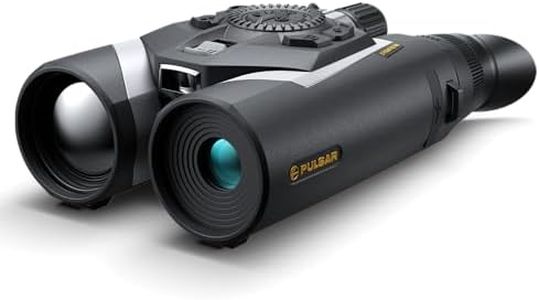
Pulsar Symbion DXT50 LRF Thermal and Digital Night Vision Binoculars with Laser Range Finder, 1280x1024 12 µm Sensor, 2-16x Magnification, Long Range Binoculars

The Pulsar Symbion DXT50 is a high-end thermal and digital night vision binocular designed for serious outdoor enthusiasts, including hunters and wildlife observers. Its standout feature is the impressive 1280x1024 thermal sensor with a 12 µm pixel size and a very sensitive NETD of less than 40 mK, which means it can clearly detect heat signatures even in challenging conditions like fog or rain. The 50 mm lens combined with a 13-degree field of view provides a good balance between detail and viewing area, while the zoom ranges from 2x to 16x, allowing flexible observation distances. The built-in laser rangefinder adds another layer of utility by measuring distances up to 1,640 yards with high accuracy, which is useful for precise tracking or targeting.

Multiple viewing modes, including thermal, digital, and picture-in-picture, make it easy to switch between different types of imaging based on your environment. On top of that, the device offers convenient features like Wi-Fi and Bluetooth connectivity, onboard photo and video recording, and a removable battery for extended use in the field. Durability is well addressed with a magnesium alloy body rated IP67, meaning it’s waterproof and dustproof, suitable for rough outdoor conditions.

The binocular is fairly lightweight at just over 2 pounds, but the relatively narrow exit pupil and fixed focus might require some adjustment for comfort during extended use. Its price and export control restrictions could limit accessibility for casual users. This makes the Symbion DXT50 most suitable for those who need a robust, feature-rich thermal binocular with precise ranging and imaging capabilities rather than casual or budget users.

#2

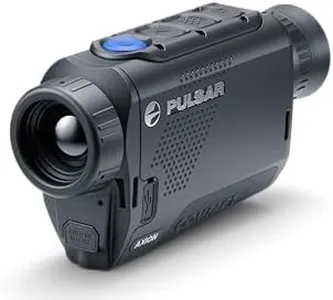
Pulsar Axion XQ19 Compact Thermal Monocular, 384x288 17 µm Sensor, 1.5-6x Magnification, Thermal Scope for Hunting

Rating
8.8
Resolution
Sensitivity (NETD)
Durability and Ergonomics

Most important from
28 reviews

Resolution
The 384 x 288 sensor resolution with a NETD below 18mK delivers exceptional thermal sensitivity rarely found at this price point.
Sensitivity (NETD)
The 384 x 288 sensor resolution with a NETD below 18mK delivers exceptional thermal sensitivity rarely found at this price point.
Durability and Ergonomics
The monocular feels like a professional-grade tool, combining solid build quality with a compact, lightweight design.
Display and Connectivity
The viewfinder display is impressively large and clear, striking a great balance between size and detail compared to other models.

The Pulsar Axion XQ19 is a compact thermal monocular designed primarily for hunting and outdoor heat detection. It features a 384x288 resolution thermal sensor with a very sensitive NETD below 18mK, enabling detection of subtle temperature differences even in challenging conditions like fog or rain. Its 19.5° field of view and 1.5–6x digital zoom offer flexibility to scan wide areas or zoom in on details, which is handy for spotting or tracking game.

The 640x400 AMOLED display delivers sharp, bright images with strong contrast, making it easier to see thermal signatures clearly in low light or visually cluttered environments. This screen is also responsive in extreme temperatures, adding to its reliability outdoors. The monocular weighs just over half a pound and has a compact design, making it easy to carry for long periods. It includes useful accessories like a hand strap, battery, and USB-C cable for charging or data transfer. The unit requires a single 9V battery, which may be less convenient than rechargeable packs used in other models.

The Axion XQ19 suits hunters and outdoor enthusiasts who need a durable, portable thermal camera with good resolution and thermal sensitivity. Users seeking longer battery life or more advanced video features might consider options with rechargeable batteries and higher frame rates.

Rating
8.8
Resolution
Sensitivity (NETD)
Durability and Ergonomics

Most important from
28 reviews

Resolution
The 384 x 288 sensor resolution with a NETD below 18mK delivers exceptional thermal sensitivity rarely found at this price point.
Sensitivity (NETD)
The 384 x 288 sensor resolution with a NETD below 18mK delivers exceptional thermal sensitivity rarely found at this price point.
Durability and Ergonomics
The monocular feels like a professional-grade tool, combining solid build quality with a compact, lightweight design.
Display and Connectivity
The viewfinder display is impressively large and clear, striking a great balance between size and detail compared to other models.
#3

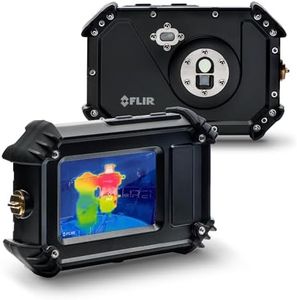
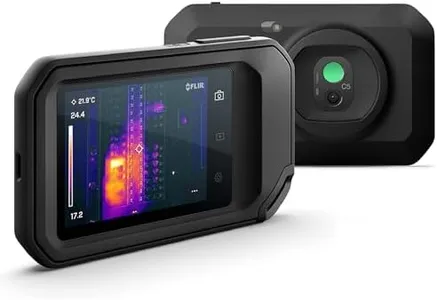
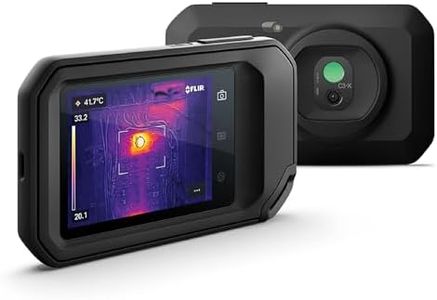
FLIR Cx5 Hazardous Location Rated Thermal Imaging Camera with WiFi: High Resolution Infrared Imager

Rating
8.2
Resolution
Temperature Range
Sensitivity (NETD)

Most important from
2 reviews

Resolution
Its thermal resolution is adequate for detailed inspections when getting closer to the subject, balancing cost and performance effectively.
Temperature Range
Automatic high and low temperature indicators and spot temperature readings simplify interpreting thermal data.
Sensitivity (NETD)
The camera’s thermal sensitivity captures subtle heat signatures, like a cat's warmth lingering on a rug, enhancing detection accuracy.
Display and Connectivity
Well built and rugged, with a bright, clear, and large screen that makes viewing thermal images easy.
Durability and Ergonomics
Well built and rugged, with a bright, clear, and large screen that makes viewing thermal images easy.

The FLIR Cx5 is a handheld thermal imaging camera designed for use in hazardous environments, making it a practical tool for professionals who need safe and reliable temperature measurements. It captures thermal images at a resolution of 160 x 120 pixels, which is decent for spotting hidden faults but not the highest in the market. Its temperature range from -20°C to 400°C (-4°F to 752°F) covers most common industrial and maintenance needs. The camera features FLIR's patented MSX technology, which adds visual details to thermal images, making them easier to interpret without losing thermal accuracy. This is especially useful if you're troubleshooting or diagnosing issues.

The device includes a 1080p video capture for visual context and supports picture-in-picture mode to compare thermal and real images side by side. In terms of usability, it offers WiFi connectivity for direct uploading to FLIR's cloud service, simplifying sharing and reporting. The battery lasts around 4 hours, which is sufficient for typical work sessions, and the camera is lightweight at about 6.7 ounces, making it comfortable to handle. Its compact size and included wrist strap enhance portability and safety during use.

The FLIR Cx5 benefits from a strong warranty program, including 2 years on parts and labor and 10 years on the detector, reflecting confidence in its durability. If you need a thermal camera for general industrial inspections or maintenance in hazardous locations, the Cx5 provides a solid mix of features, ease of use, and reliability. For those requiring higher resolution or very sensitive thermal detection for detailed analysis, more advanced options are available.

Rating
8.2
Resolution
Temperature Range
Sensitivity (NETD)

Most important from
2 reviews

Resolution
Its thermal resolution is adequate for detailed inspections when getting closer to the subject, balancing cost and performance effectively.
Temperature Range
Automatic high and low temperature indicators and spot temperature readings simplify interpreting thermal data.
Sensitivity (NETD)
The camera’s thermal sensitivity captures subtle heat signatures, like a cat's warmth lingering on a rug, enhancing detection accuracy.
Display and Connectivity
Well built and rugged, with a bright, clear, and large screen that makes viewing thermal images easy.
Durability and Ergonomics
Well built and rugged, with a bright, clear, and large screen that makes viewing thermal images easy.

Buying Guide for the Best Thermal Infrared Cameras

Choosing the right thermal infrared camera can be a bit overwhelming, but understanding the key specifications can help you make an informed decision. Thermal infrared cameras are used to detect heat patterns and temperature differences, which can be useful in various applications such as building inspections, electrical inspections, and even medical diagnostics. To find the best fit for your needs, consider the following key specifications and how they align with your intended use.
ResolutionResolution refers to the number of pixels in the thermal image. Higher resolution provides more detail and clarity, which is important for identifying small temperature differences and capturing detailed images. Resolutions can range from low (80x60 pixels) to high (640x480 pixels or more). If you need to detect fine details or work in large areas, opt for a higher resolution. For general use or smaller areas, a lower resolution may suffice.
Temperature RangeThe temperature range indicates the minimum and maximum temperatures the camera can measure. This is crucial depending on the environment and the temperatures you expect to encounter. For example, industrial applications may require a camera with a wide temperature range (e.g., -20°C to 1500°C), while home inspections might only need a narrower range (e.g., -10°C to 150°C). Choose a camera with a temperature range that covers the extremes you anticipate in your specific application.
Sensitivity (NETD)Sensitivity, often expressed as NETD (Noise Equivalent Temperature Difference), measures the camera's ability to detect small temperature differences. A lower NETD value indicates higher sensitivity and better performance in detecting subtle temperature variations. Sensitivity values typically range from 30mK to 100mK. For applications requiring precise temperature measurements, such as medical diagnostics or detailed inspections, a camera with higher sensitivity (lower NETD) is preferable. For less critical applications, a higher NETD may be acceptable.
Field of View (FOV)Field of View (FOV) describes the extent of the observable area the camera can capture at any given moment. A wider FOV allows you to see a larger area, which is useful for scanning large surfaces quickly. Conversely, a narrower FOV provides more detail in a smaller area. FOV is typically expressed in degrees, such as 45° x 34°. If you need to inspect large areas or conduct quick surveys, a wider FOV is beneficial. For detailed inspections of smaller areas, a narrower FOV is more appropriate.
Frame RateFrame rate indicates how many thermal images the camera captures per second, measured in Hertz (Hz). Higher frame rates (e.g., 30Hz or 60Hz) provide smoother video and are essential for capturing fast-moving objects or dynamic scenes. Lower frame rates (e.g., 9Hz) are sufficient for static inspections and can be more cost-effective. Choose a higher frame rate if you need to monitor moving objects or require real-time analysis. For stationary inspections, a lower frame rate will generally suffice.
Display and ConnectivityThe display size and type, as well as connectivity options, affect how you view and transfer thermal images. Larger, high-resolution displays make it easier to analyze images on the camera itself. Connectivity options like Wi-Fi, Bluetooth, and USB allow for easy transfer of images to other devices for further analysis. Consider a camera with a display and connectivity features that match your workflow. If you need to share images quickly or analyze them on a computer, ensure the camera supports the necessary connectivity options.
Durability and ErgonomicsDurability and ergonomics refer to the camera's build quality and how comfortable it is to use. A rugged, durable camera is essential for harsh environments, while a lightweight, ergonomic design is important for extended use. Look for features like water and dust resistance, as well as a comfortable grip and intuitive controls. Choose a camera that can withstand the conditions of your work environment and is comfortable to use for the duration of your tasks.

FAQ